
The years between kindergarten and middle school are busy ones for a growing body. Eyes change, bodies stretch, habits form, and the way a child feels can shift from one season to the next. A yearly check-up is the best chance all year to notice those changes early, while your child still feels fine. That is worth far more than a signature on a form.
This guide is for parents across Luce County and the eastern Upper Peninsula. It walks through what a school check-up actually covers, what it can catch early in kids ages 5 to 13, how it differs from a sports physical, and which shots Michigan asks for. The goal is simple: to help you start the school year with one less thing to worry about.
In short: a yearly well-child visit checks growth, vision and hearing, breathing, mood, and development, and it is where small problems get caught before they grow. Michigan requires certain shots, or a signed waiver, for school. Summer is the easiest time to schedule at HNJH, close to home.
What is a school physical, and what does it check?
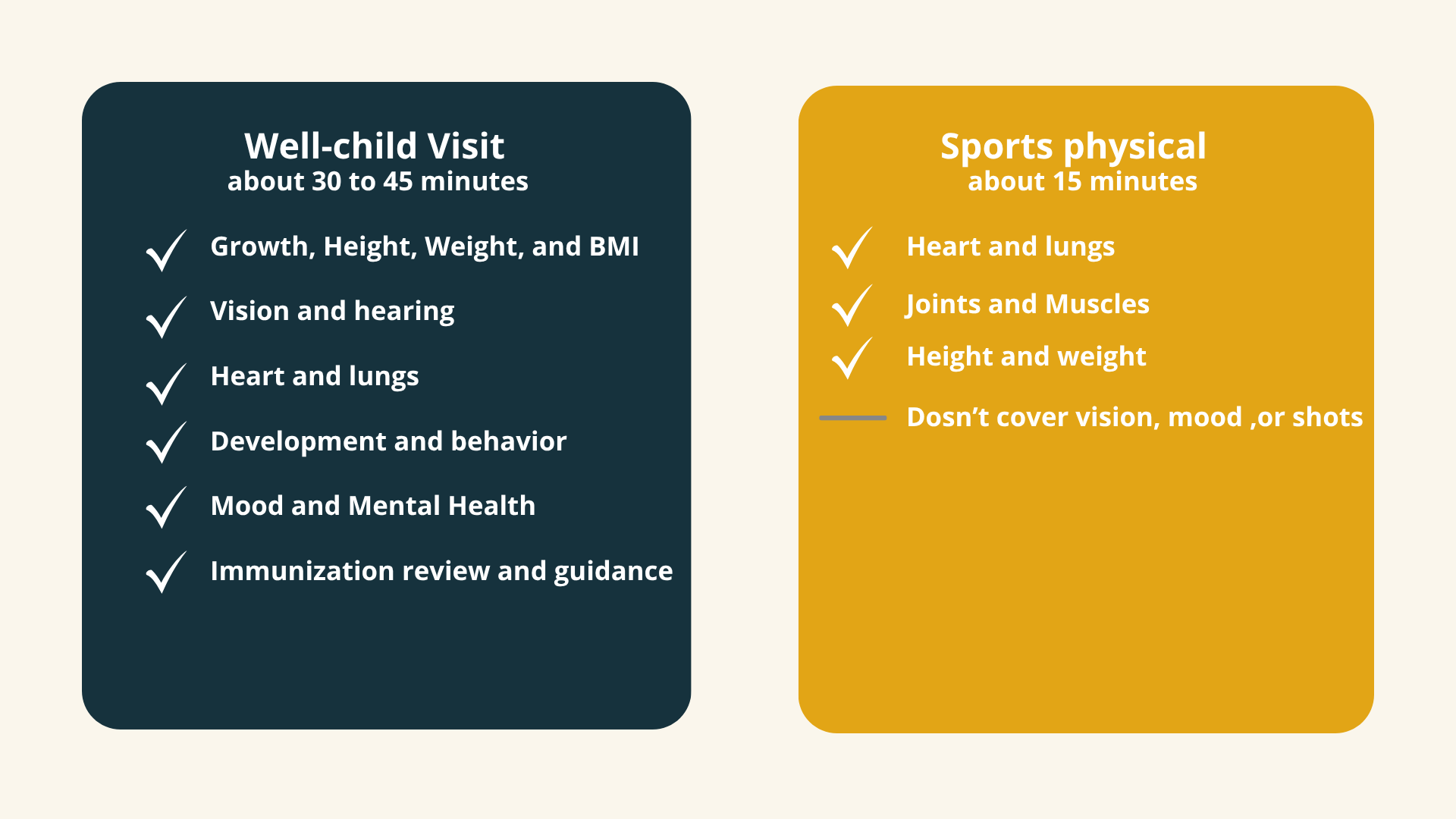
A school physical, also called a well-child visit, is a yearly checkup that looks at your child’s whole health. It usually takes 30 to 45 minutes, and a provider uses that time to see how your child is growing and developing.
Most visits cover a lot of ground:
- Growth, including height, weight, and body mass index tracked over time
- Vision and hearing
- Heart, lungs, and breathing
- Development, learning, and behavior
- Mood, with a private chance to talk about stress, anxiety, or sadness
- A review of shots, plus guidance on nutrition, sleep, and safety
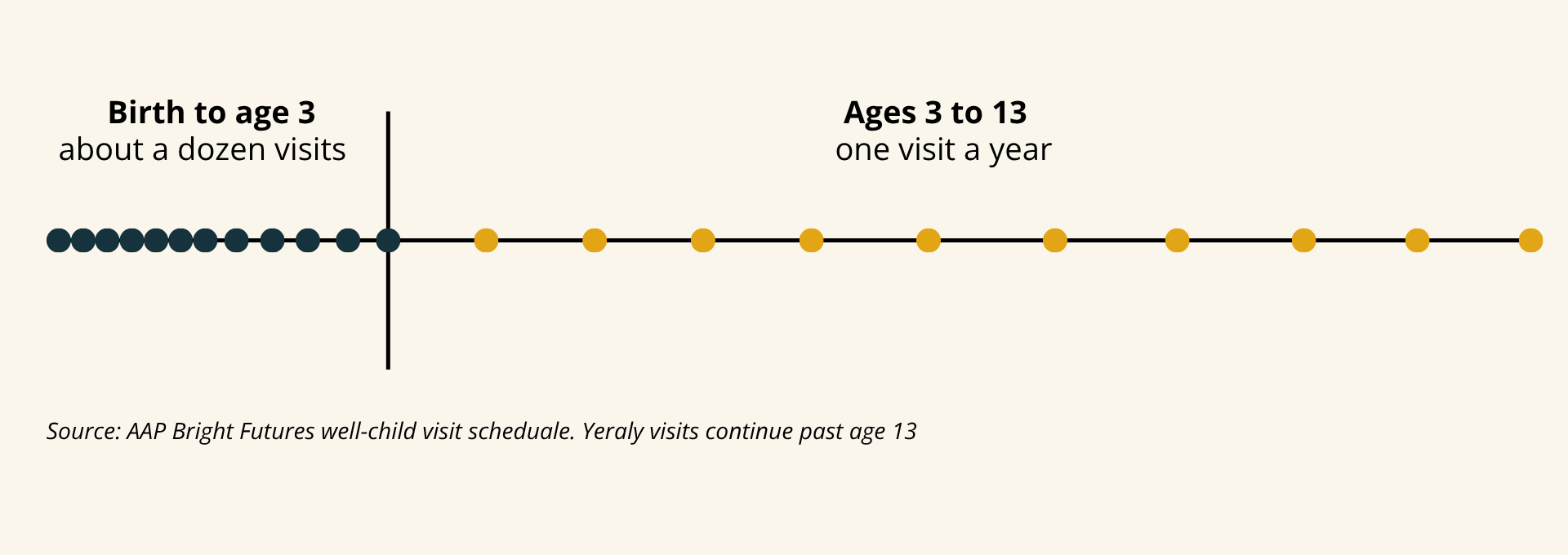
The American Academy of Pediatrics recommends a well-child visit every year. Those visits start early and often. Babies and toddlers see a provider around a dozen times before age 3, and from age 3 on the recommendation settles into once a year, all the way through the school years.
Even when your child seems perfectly healthy, those yearly visits matter. Each one builds a picture of what is normal for your child, which makes it easier to spot when something changes.
What can a yearly check-up catch early in kids ages 5 to 13?
Quite a lot, and most of it is far easier to handle when it is found early. Here is what a good check-up is quietly looking for during the elementary and middle school years.
Vision and hearing.
About 1 in 4 school-age children has a vision problem, and many go undiagnosed because kids do not always know that what they see is blurry (American Optometric Association). Since roughly 80 percent of classroom learning is visual, an undetected vision problem can look like trouble paying attention or falling behind, when really a child just cannot see the board. Hearing is checked too, since a missed hearing issue can affect speech and learning. The good news is that a simple screening catches most of this, and the fixes are often as easy as glasses.
Growth, weight, and blood pressure.
The visit tracks height and weight over time, which tells a provider far more than a single number ever could. About 1 in 5 children ages 6 to 11 has obesity, and roughly 70 percent of children with obesity already have at least one risk factor for heart disease, such as high blood pressure or high cholesterol (CDC). These rarely cause symptoms a parent would notice at home, so the check-up is often the only place they turn up. Caught early, they are very manageable with small, supportive changes.
Breathing and asthma.
About 1 in 12 children has asthma, and it is one of the leading reasons kids miss school, adding up to roughly 13.8 million missed school days a year nationwide (CDC). A check-up is a chance to see whether breathing is well controlled and to adjust a plan if it is not. Well-managed asthma keeps kids in class, active, and sleeping through the night. If your child wheezes, coughs at night, or tires quickly, our team can help right here through our asthma and allergy care.
Emotional and mental health.
The school years are when many feelings first surface. About half of lifetime mental health conditions begin by age 14, and roughly 1 in 6 children ages 6 to 17 has a treatable condition such as anxiety, depression, or ADHD (World Health Organization, CDC). A check-up gives your child a calm, private moment to talk, and gives you a trusted person to bring concerns to. Naming something early makes it smaller, not bigger.
Most visits end with reassurance and a clean bill of health. The value is in the peace of mind, and in catching the rare thing while it is still small.
School physical vs. sports physical: what is the difference?
They are not the same thing. A sports physical is a shorter, focused exam, around 15 minutes, that clears your child to play by checking the heart, lungs, joints, height, and weight. A well-child visit is the longer, complete look at overall health described above.
If your child plays a school sport, Michigan has a specific rule. The Michigan High School Athletic Association requires a sports physical for every student athlete, and the exam must be dated on or after April 15 to count for the coming school year. You can download the MHSAA form on our sports screening page. In many cases, your provider can complete the sports physical as part of a full well-child visit, so you handle both in one appointment.
A sports physical does its job well, but it only looks at a few parts of the body. On its own, it cannot show you the full picture of how your child is growing and developing. That fuller view is what the yearly well-child visit is for.
What shots does Michigan require for school?
To attend a Michigan school, your child needs proof of certain vaccines on file, or a signed waiver. The required vaccines are:
- DTaP for diphtheria, tetanus, and pertussis, with a Tdap booster at age 11 or older entering 7th grade
- Polio (IPV)
- MMR for measles, mumps, and rubella
- Hepatitis B
- Varicella (chickenpox), or proof of immunity
- Meningococcal conjugate (MenACWY), required at age 11 or older entering 7th grade
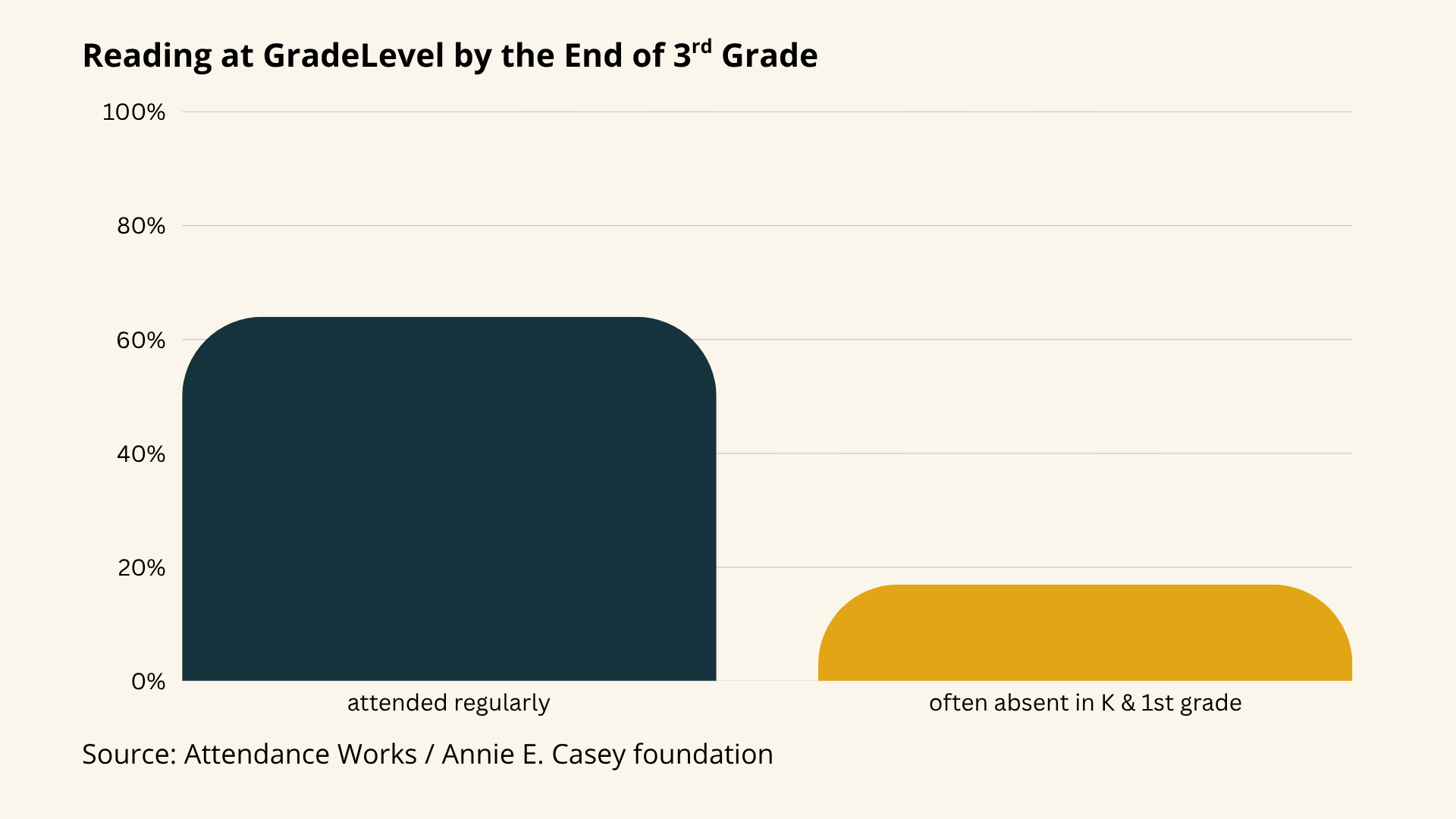
Staying current on shots does more than meet a requirement. It also helps keep kids in their seats. Missing school adds up quickly: in one large study, only 17 percent of children who were often absent in kindergarten and first grade were reading at grade level by the end of third grade, compared with 64 percent of children who attended regularly (Attendance Works). Sick days are a big part of those absences. During a measles outbreak, for example, an unvaccinated child who has been exposed can be kept home for about three weeks under public health rules, while a vaccinated classmate stays in class (CDC).
Schools report immunization status for kindergarteners, 7th graders, and students who are new to a district. If you are not sure where your child stands, a well-child visit is a simple time to review the record and update anything that is due. Michigan allows both medical and nonmedical waivers, and the choice is yours to make. If you have questions, your child’s provider and your local health department can walk you through the options, with no pressure either way.
When should you schedule, and what should you bring?
Summer is the time, and earlier is easier. Appointments fill quickly in late August, and athletes have an extra reason to plan ahead, since the MHSAA physical only counts if it is dated on or after April 15 of this year.
When you come in, bring a few things to make the visit smooth:
- Your child’s immunization records
- The school or MHSAA sports form that needs a signature
- A list of any medications your child takes
- Any questions you have about growth, mood, sleep, or development
Cost should not stand in the way. Well-child visits are typically covered by insurance, including Medicaid, and we have financial assistance options if you need them. You can schedule at the Gibson Family Health Clinic or another of our local clinics, close to home.
Questions Parents Have Related To School Physicals
When does my child need a school physical?
The American Academy of Pediatrics recommends a well-child visit every year. If your child plays a school sport, Michigan also requires a sports physical each year, dated on or after April 15 to be valid for the coming season.
Are a school physical and a sports physical the same thing?
No. A sports physical is a shorter exam that clears your child to play, focused on the heart, lungs, joints, height, and weight. A well-child visit is a longer, complete checkup. In many cases, a provider can do both in one appointment.
What vaccines does Michigan require for school?
Michigan requires DTaP and a Tdap booster, polio, MMR, hepatitis B, varicella, and the meningococcal conjugate vaccine for 7th grade and up. Families may also file a medical or nonmedical waiver. Your provider can review your child’s records with you.
Are well-child visits covered by insurance?
In most cases, yes. Well-child visits are typically covered by private insurance and Medicaid as preventive care. If you are unsure or need help, our team can talk through your options.
Where can I get a school or sports physical near Newberry?
Helen Newberry Joy Hospital offers school and sports physicals at the Gibson Family Health Clinic and our community clinics, right here close to home. You can call to schedule a time that works for your family.
Take the next step
Summer is the easiest time to get this done, and we are glad to help. Schedule a check-up at Helen Newberry Joy Hospital, and start the year knowing your child is healthy and ready to learn. Whenever you are ready, we are right here in your community.